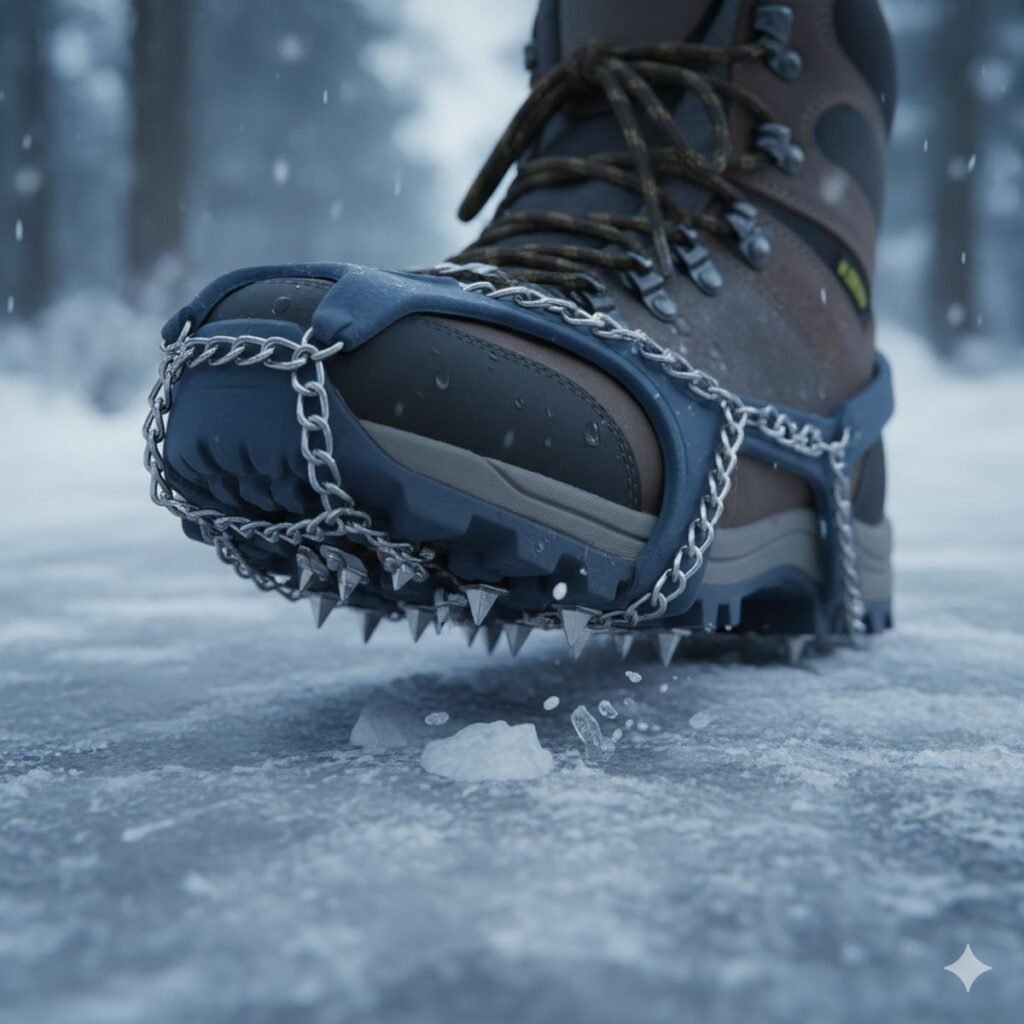
Snow grips for shoes / Microspikes for shoes / Crampons / Ice cleats
Why Winter Traction is Vital for Active Aging
Reducing the Risk of Slips and Falls
There are big differences in the different makes and types of winter traction addons for your shoes and boots and choosing the right type for you is quite an important decision for your comfort, ease of use and safety. Below we will look at the key things to consider to reduce risks of slips and falls.
- How easy are they to put on and take off?
- Do they provide grip along the full length of the shoe or just part?
- What is the durability like for your traction aids?
- How noisy are they outdoors and indoors (trust me this can be important)?
- Are they OK to wear indoors without damaging floor surfaces?
- Are they good for light / patchy ice?
- Are they good for thick snow or compacted ice?
- Tungsten Carbide Studs: Harder than steel, these maintain a sharp edge on ice rather than rounding off after a few miles.
- Low-Temperature Elastomers: Ensure the rubber harness is rated for sub-zero use so it remains pliable and doesn’t snap under tension.
- Mechanical Load Distribution: Look for designs that spread your weight across the entire sole to prevent “lateral roll” and improve stability.
- Corrosion-Resistant Links: Stainless steel chains or treated coils are essential to survive the corrosive effects of road salt.
Maintaining Confidence in Icy Conditions
Confidence comes from choosing the right footwear and ice grips / microspikes / crampons / coils plus taking the time to test them out in different conditions. Walking on thin patchy black ice is very different to walking on compacted snow or thicker snow. Its vital to always maintain attention of the changing conditions and environment.
Understanding the Types: Microspike vs. Crampons vs. Coils
Rubber Pull-over Grips (Best for Pavements)
These are my usual go to pair as I do a lot of pavement walking and walking along paths in parks. Within this type of ice grip there are many different types and qualities.
Metal Microspikes (Best for Hiking and Trails)
These are great on hiking trails and the countryside when there’s been a good snowfall which may be loose snow of compacted ice. The spikes dig into the ice and snow very well and also grip the ground below. These are unsuitable for hard pavements and not to be worn indoors as they will damage flooring.
Heavy-Duty Crampons (When to Avoid Them)
These can be superb in very severe conditions or for serious winter hikers. When the snow and ice is thin or your encountering a lot of hard surfaces many hikers report that these are not ideal. For serious winter walkers they can be a good set to have in your kit though.
Essential Winter Safety Checklist for Active Agers
Walking in the snow is a great way to stay active, but it requires a bit more “prep” than a summer stroll. Before you head out with your new snow grips, keep this checklist in mind:
- Check the “Stretch”: Before it gets icy, try fitting your snow grips onto your boots while you are sitting in a warm room. Some rubber can be quite stiff; if it’s too hard to pull on, it’s better to know now than when you’re at the front door in the cold.
- The “Shop” Rule: Never wear metal-spiked grips inside a shop, post office, or on a train station platform. They become incredibly slippery on smooth tiles—like walking on ball bearings! Sit down on a bench and remove them before heading indoors.
- Walk Like a Penguin: If you hit a particularly treacherous patch, keep your weight centered over your feet. Take shorter, shuffling steps and point your toes out slightly—this “penguin walk” significantly lowers your risk of a fall.
- Hands-Free Balance: Avoid carrying heavy bags in your hands. Use a backpack so your arms are free to help you balance if you hit an unexpected slick spot.
- Light the Way: UK winter afternoons get dark very quickly. If you’re heading out after 3 PM, carry a small torch or wear a reflective high-vis strip so drivers can see you clearly.
- Carry a “Grip Bag”: Keep a small, waterproof plastic bag in your pocket. When you take your grips off to go into a shop, you can pop the wet, slushy grips into the bag so they don’t soak your coat pocket.
- Inspect the Spikes: After every few walks, check the bottom of your grips. Metal studs can sometimes pop out, and rubber can perish over time. A quick 10-second check ensures they are ready for your next adventure.
The Engineering Verdict: Winter traction isn’t just about “grip”—it’s about the mechanical interface between your weight and the ice. For most active seniors, I recommend a full-sole elastomer harness with tungsten carbide studs. It offers the best balance of durability and safety without the bulk of heavy-duty crampons.
Based on the engineering criteria above, I’ve shortlisted the top performers for safety. |

With over 50 years of experience spanning from an apprentice blacksmith and plant fitter to an NHS Network Administrator and IT specialist, I’ve spent my life understanding how things are built and how they break. From the physical durability of tungsten carbide tool tips to the digital complexities of cybersecurity, I bring a “no-nonsense” engineering eye to the world of senior technology and mobility.
My mission with Active Ager Guide is to help you navigate the modern world with the same stability and independence I look for myself. Whether it’s finding the best ice grippers or setting up a secure backup system for family photos, I prioritize practical, reliable, and “over-engineered” solutions that actually work.